Stop Unexpected Gym Charges: How Billing Works and What to Do
Stop Unexpected Gym Charges: How Billing Works and What to Do
Gym membership billing runs on a recurring cycle tied to your signup date, and most declined charges get fixed the same day you update your card or bank details in the club’s app or member portal. If a payment fails, act fast: log in, correct the payment method, and confirm the fix before the next retry hits. Keep a screenshot or confirmation email of every update or call, since that record is your best defense if a dispute or collections notice ever shows up later.
TL;DR:
- Most gym chains process failed payments within a day if cards or bank details are corrected promptly, preventing overdue charges or account holds.
- Updating your payment method via the app, website, or in person usually takes minutes and should be confirmed with a message or email for record keeping.
- Gym billing typically starts from your sign-up date, with prorated charges for mid-cycle joins, but cancelations made after billing won’t prevent the upcoming charge.
- Declined charges are rarely personal; common causes include expired cards, insufficient funds, incorrect details, or bank declines, with retries typically happening within days.
- Canceling your membership requires following the gym’s specific process, and freezing or transferring are options if you need a break or are relocating, often with different billing considerations.
Table of Contents
- How to Update Your Gym Membership Payment Method
- When Does Your Gym Actually Charge You?
- Why Did My Gym Payment Fail, and What Happens Next?
- Canceling, Pausing, or Transferring Your Membership
- Contracts and Auto-Renewal: What to Check Before You Sign or Cancel
- How Gyms Process Your Payment and Protect Your Card Data
- Troubleshooting Checklist Before You Call Your Gym
- Promotional Billing Offers and How They Affect Regular Charges
- Impact of Membership Freezes or Holds on Billing
- Why Clear Billing Matters More Than Most Gyms Realize
- Merchant Solutions Corp: A Practical Payment Setup for Gyms
- Sources
- FAQ
How to Update Your Gym Membership Payment Method
Most clubs give you three ways to fix or change a payment method, and all three usually work within minutes.
- Mobile app. Open the club’s app, go to the billing or account tab, and select “payment method.” Tonal’s support instructions walk through a typical flow: log in, tap account settings, enter the new card or bank details, and save.
- Member web portal. Log into your account online, usually under “My Account” or “Billing Info,” and swap the card or bank account on file. Planet Fitness handles this under a “My Billing Info & Balance” section, where members can update payment details and make a payment without visiting the front desk.
- In person or by phone. Front desk staff or a call center rep can update your file directly, which is often the fastest fix if you’re locked out of your login.
Before you start, have these ready:
- Your account login (email and password, or member ID)
- The new card number, expiration date, and security code, or your bank’s routing and account number
- A form of ID or the answers to a security question, in case the club verifies your identity
Setting a new primary payment method updates all future recurring charges, while a one-time manual payment only covers the balance due right now and does not change what gets charged next cycle. Most systems apply the update within a few hours, though some clubs won’t retry a failed charge until the next scheduled billing date, so don’t assume an update instantly reverses a hold on your account. Once the change goes through, you should see a confirmation message and an updated “next billing date” in your portal. If you don’t see that confirmation, the update likely didn’t save, and you should try again or call the club directly.
When Does Your Gym Actually Charge You?
Gym subscription fees typically bill monthly, starting from the date you signed up rather than the first of the calendar month. Some clubs let you request a different date within a set window, commonly a range like the 1st through the 28th, though changing it may require advance notice, as VASA Fitness’s billing FAQ explains. A smaller share of gyms bill quarterly or annually instead of monthly.
A few patterns to watch for:
- Prorated first charge. If you join mid-cycle, many clubs charge a partial amount covering just the days left before your next full billing date.
- Prorated cancellation. Canceling mid-cycle doesn’t always mean a partial refund. Some clubs bill the full month regardless of when you cancel within it.
- The “extra month” surprise. If your cancellation request lands after the monthly billing run, you may get charged one more time before the cancellation takes effect. This is a timing issue tied to contract terms, not necessarily a mistake.
Your exact billing date usually sits in your portal under account settings or billing history, often labeled “next payment date” or “upcoming charge.” Recurring billing systems commonly run on a monthly cycle counted from the day you signed up, according to GymMaster’s billing documentation, which is why two members who joined the same gym in different weeks can have completely different due dates.
Why Did My Gym Payment Fail, and What Happens Next?
A declined charge is rarely personal. It’s almost always one of a handful of predictable causes.
- Expired or replaced card. The most common reason, especially right after your bank issues a new card number.
- Insufficient funds. Especially common around the first of the month when several bills hit at once.
- Incorrect account details. A typo in a routing number or an old card digit still on file.
- Bank-side declines or returned ACH. Your bank may flag the transaction as suspicious, or a returned ACH transfer can trigger a separate return fee.
Here’s the typical sequence once a charge fails: the gym’s billing system usually retries the charge a few days later, and if it fails again, you may see a late fee or return fee added to your account, followed by a hold on facility access if the balance stays unpaid. Left unresolved long enough, some clubs will send the account to collections.
The fix is almost always the same three steps: update your payment method immediately, make a manual payment to clear the balance, and save a record of when you called or emailed the club. If the decline seems to be a bank error (you know you have funds, but the charge still bounced), call your bank first. If the amount charged looks wrong or a fee seems unauthorized, that’s a conversation for the gym’s billing office instead.
Pro Tip: Set a calendar reminder a few days before your billing date each month. A thirty-second balance check beats a $25 return fee and a week of phone tag with your bank.
Canceling, Pausing, or Transferring Your Membership
Stopping your card or removing your bank account from your bank’s end does not cancel your membership. Gyms consider you an active member, technically in default, until you complete their specific cancellation process, and that gap is exactly how accounts end up in collections.
- Follow the exact cancellation steps your gym requires. Some accept an online form or app request; others require a written letter or an in-person visit. Get a confirmation number or email every time.
- Check the required notice period. Many contracts require 30 days’ written notice before your next billing date, so canceling the same week you’re charged usually doesn’t stop that charge.
- Request a freeze instead of a full cancellation if you just need a break. Freezes typically have eligibility rules (medical, travel, military) and a maximum duration, and they usually still carry a small monthly holding fee rather than a full membership charge.
- Ask about transfers if you’re relocating. Many multi-location chains let you move your membership to a different club with proof of the new address, sometimes with a small transfer fee.
- Understand refund timing. Refunds are typically processed through the billing provider rather than issued directly by front desk staff, and can take several business days to post back to your card or account, per GymMaster’s documentation.
Get every cancellation, freeze, or transfer confirmed in writing. A verbal “yes, you’re all set” from a staff member means nothing if the charge shows up again next month.
Contracts and Auto-Renewal: What to Check Before You Sign or Cancel
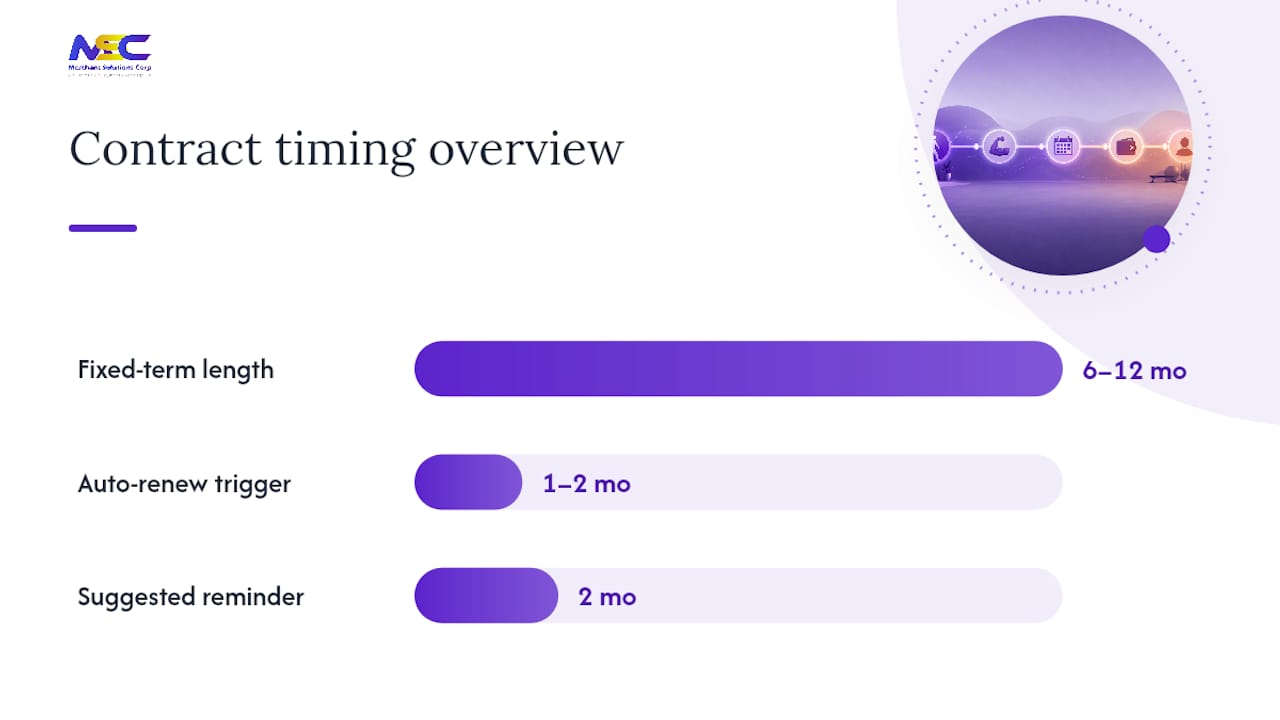
Fixed-term contracts, usually 6 to 12 months, differ from month-to-month memberships in one critical way: they often include an auto-renewal clause that quietly extends your commitment unless you cancel within a specific window before the term ends.
Watch for these details in your agreement:
- Auto-renewal trigger date. Many contracts auto-renew 30 to 60 days before the original term ends, not on the exact anniversary date.
- Early termination fees. Breaking a fixed-term contract early can carry a flat fee or a percentage of the remaining balance.
- Silent lapse into month-to-month. Some contracts convert automatically to a month-to-month rate, often higher than your original promotional rate, once the fixed term ends.
Members who stop paying without formally canceling risk landing in collections, since gym industry guidance on contract terms notes that unpaid, non-canceled accounts are typically treated as delinquent rather than closed. The most reliable habit: mark the last two months of any contract term on your calendar and start the cancellation or renegotiation conversation early, rather than waiting for the renewal charge to remind you.
How Gyms Process Your Payment and Protect Your Card Data
Your gym almost never touches your raw card number directly. A third-party billing provider sits between your gym’s software and your bank, handling the recurring charge and storing a token, a scrambled substitute for your card details, instead of the real number.
Payment platforms don’t store raw card numbers; a billing provider tokenizes the payment details and returns a token that the gym’s software uses to process future charges. That single design choice is why a data breach at a gym rarely exposes usable card numbers.
This structure, described in GymMaster’s billing FAQ, also shrinks the gym’s own PCI DSS compliance burden, since the sensitive data lives with the processor, not the club’s front desk computer.
A few practical implications for you as a member:
- Refunds and returns typically get initiated at the billing-provider level, which is why a refund can take longer to appear than the original charge did.
- ACH (bank transfer) payments generally cost gyms less to process than card payments, which is why some clubs, like VASA Fitness, offer a discount to members who pay by direct debit rather than by card.
- ACH does carry its own risk: a returned transfer (insufficient funds, closed account) often triggers a separate return fee, distinct from a card decline fee.
- Card payments tend to process faster and dispute more easily through your bank, while ACH is cheaper but slower to reverse if something goes wrong.
Businesses that run recurring billing, gyms included, generally rely on payment infrastructure built around ACH and eCheck processing specifically because bank-to-bank transfers cost less per transaction than card networks charge, savings that sometimes get passed to members as a discount.
Troubleshooting Checklist Before You Call Your Gym
Save yourself a hold-music marathon by gathering this before you dial.
- Log into the portal and check for an error message next to the failed charge.
- Screenshot or copy the exact error text, since vague messages (“payment failed”) and specific ones (“insufficient funds”) point to different fixes.
- Update your payment method in the app or portal before calling, in case it resolves itself.
- Make a manual payment if there’s an outstanding balance, and request an emailed receipt.
- Ask these three questions directly: “What is my exact billing date?” “Was my most recent payment received and deposited?” “Is there a hold or fee currently on my account?”
Save every confirmation email, screenshot, and reference number in one folder. If your bank charged you for something the gym insists it never received, or a fee seems to violate what your contract states, that’s the point to consider a formal bank dispute or a complaint through your state’s consumer protection office.
Promotional Billing Offers and How They Affect Regular Charges
A “$1 down” or “half-off your first three months” offer is a temporary rate, not a permanent one, and the fine print determines exactly when the regular rate kicks back in. Most promotional pricing reverts automatically once the promo period ends, and that reversion charge is often larger than members expect because it’s the first time they’re paying the true monthly dues.
Two details matter most when you sign up for any promotional rate: the exact date the discount ends, and whether the promotional period counts toward a minimum contract term. Some clubs run promos on month-to-month plans, meaning you can cancel any time without penalty once the discount ends. Others attach the promo to a 12-month commitment, so the discounted months are simply the first slice of a longer obligation you’re still on the hook for.
Check your welcome email or signed agreement for the exact end date of any promotional rate, then set a reminder a week before it expires. That gives you time to decide whether the full price still works for your budget, or whether it’s time to renegotiate, freeze, or cancel before the higher charge posts.
Impact of Membership Freezes or Holds on Billing
A freeze or hold pauses your active membership access, but it rarely pauses your bill entirely. Most clubs shift you to a reduced holding fee instead of your regular monthly dues, though the exact amount and duration limits vary by club and freeze reason.
Common freeze categories include medical leave, military deployment, and extended travel, and each usually requires documentation, a doctor’s note, deployment orders, or similar proof, before the club will approve it. Freezes typically run for a set window, often one to three months, and some clubs cap how many freezes you can request per year.
The billing mechanics matter here: a freeze fee still posts on your regular billing date unless you’ve specifically arranged otherwise, so don’t assume “freeze” means “zero charges.” When the freeze period ends, your account typically reverts automatically to full billing, sometimes without a reminder, so mark that end date the same way you’d mark a contract renewal.
Why Clear Billing Matters More Than Most Gyms Realize
Confusing billing is one of the fastest ways a gym loses a member who otherwise loved the workouts. A vague charge, an unclear billing date, or a clunky portal turns a five-minute question into a support ticket, and support tickets turn into cancellations.
The clubs that handle this well share a few habits: an easy self-service portal for updating cards, a clearly posted billing date visible without digging, and a real ACH discount option that gives cost-conscious members a reason to switch off cards entirely. None of that requires complicated technology. It requires a billing setup built around transparency instead of one that hopes members won’t ask questions.
The operational lesson extends past gyms. Any business running recurring charges, whether it’s a fitness studio or a subscription retailer, benefits from treating billing clarity as a retention tool rather than an afterthought. Members who understand exactly what they’re being charged and when rarely file disputes. Members who don’t, do.
— Jonathan
Merchant Solutions Corp: A Practical Payment Setup for Gyms
Every billing headache covered above, failed cards, unclear ACH handling, tokenization confusion, traces back to the payment infrastructure sitting underneath a gym’s front desk software. Merchantsolutionscorp builds that infrastructure specifically for recurring-billing businesses, combining secure card and ACH processing with reporting that shows exactly which members are current, which are past due, and which need a retry before a hold ever hits their account.
When evaluating any payments vendor for a fitness business, ask three questions: how much of the PCI compliance burden sits with the provider versus your own systems, how ACH returns get handled and re-billed, and how clear the reporting is when a member calls asking why they were charged. Merchantsolutionscorp’s payment processing and POS systems are built to answer all three with fewer manual steps for staff and fewer confused calls from members. Gyms ready to tighten their billing setup can request a rate review and see how the onboarding process works for their specific member volume.
Sources
- Planet Fitness Customer Service and FAQ
- Frequently Asked Questions About Billing
- Billing FAQ – VASA FITNESS
- Contract vs month-to-month memberships (rework resources)
- How to Update Your Tonal Membership Payment Method | Tonal Support
FAQ
Can You Expense a Gym Membership Through a Business?
Generally, no. Gym dues are typically treated as a personal expense by tax authorities unless the membership is a required, documented part of a specific job (certain athletes or trainers), so most members should not expect to write off monthly dues as a general business cost. Check with a tax professional before assuming any exception applies to your situation.
Is It Illegal to Make It Difficult to Cancel a Gym Membership?
Several states have consumer protection laws requiring gyms to offer a cancellation method at least as easy as the sign-up method, though rules vary by state. If your gym only accepts cancellation by certified mail after you signed up online in thirty seconds, that mismatch may violate your state’s rules, and it’s worth checking your state attorney general’s consumer protection page.
Is $40 a Month a Lot for a Gym?
It depends entirely on what’s included. Monthly gym dues span a wide range depending on amenities, location, and whether classes or personal training are bundled in, so a typical monthly fee could be a good value at a full-service club or steep for a bare-bones location Compare the rate against what similar clubs in your area charge for the same amenities before deciding.
How Can You Get Reimbursed for a Gym Membership?
Some employer wellness programs and select health insurance plans offer partial or full gym membership reimbursement as a benefit, so check with your HR department or insurance provider directly. Reimbursement generally requires you to submit payment receipts or a billing statement from your gym, so keeping monthly statements on hand makes the claims process faster.
How Do You Know What Payment Methods Your Gym Accepts?
Most clubs accept major credit and debit cards along with ACH or eCheck bank transfers, and some display accepted methods on their sign-up page or member portal under billing settings. If you’re unsure, the fastest way to check is your account’s billing tab or a quick call to the front desk.