Cash Discount vs. Surcharging in Puerto Rico: What Merchants Need to Know in 2026
Miguel Sauco10/15/2026
Cash Discount vs. Surcharging in Puerto Rico: What Merchants Need to Know in 2026
Credit card processing fees are frustrating.
For a business processing $50,000, $100,000, or $250,000 every month, even a small difference in processing cost can turn into thousands of dollars per year.
That has led many merchants across the United States to consider programs such as:
- Credit card surcharging
- Cash discount
- Dual pricing
- Service-fee programs
But there is an important problem.
Puerto Rico plays by different rules.
A payment program that may work for a business in Florida, Texas, or another state should not automatically be deployed at a business in San Juan, Bayamón, Carolina, Ponce, or anywhere else in Puerto Rico.
Puerto Rico's Law 150 specifically restricts additional charges tied to a customer's method of payment. And subsequent legislative changes, DACO's interpretation, and Puerto Rico court decisions have made cash-discount and dual-price strategies based solely on the customer's payment method problematic as well. Bvirtual OGP
So what can a Puerto Rico merchant do?
Quite a bit.
You simply need to attack the processing cost differently.
First, what's the difference between surcharging, cash discount, and dual pricing?
These programs often get grouped together, but they work differently.
Program How It Normally Works Puerto Rico
Credit Card Surcharge A fee gets added when the customer pays by credit card. Prohibited under Law 150
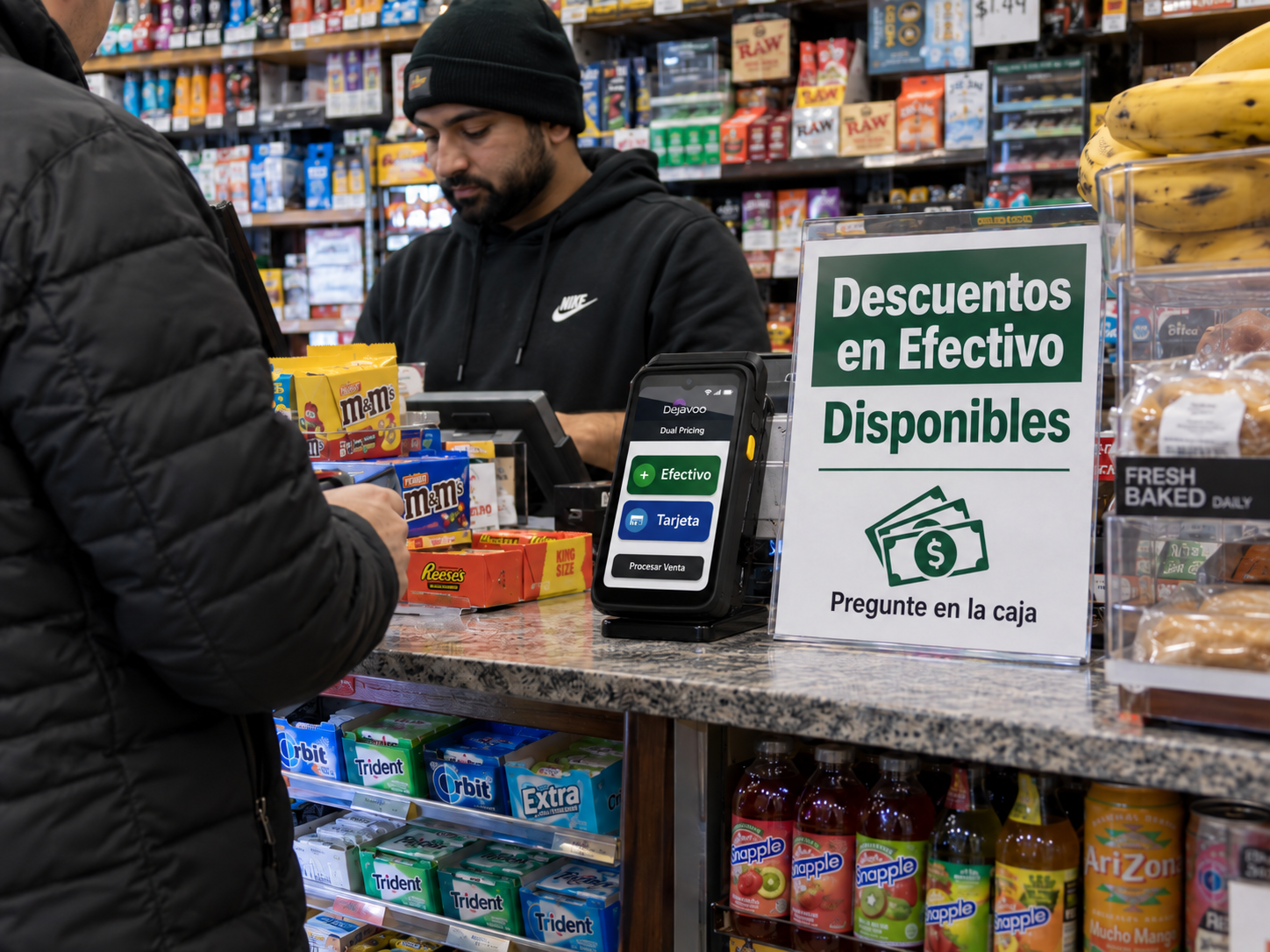
Cash Discount: A regular price is displayed, and a discount is given for paying cash. Puerto Rico removed its express cash-discount authorization, and DACO has interpreted the law against payment-method cash incentives
Dual Pricing: The merchant displays a cash price and a different card price. Puerto Rico courts have treated payment-method-based price differences as inconsistent with Law 150.
Uniform Pricing: One standard price applies regardless of how the customer pays. A practical alternative when structured correctly
Lower-Cost Processing The merchant reduces its processing expense rather than transferring it to the customer. A strong alternative for Puerto Rico merchants
The key distinction is simple.
The payment method should not become the reason the customer pays a higher or lower final price.
That is where merchants can get into trouble.
What Does Puerto Rico Law 150 Say?
Puerto Rico enacted Law 150 in 2008.
The current statute states that a merchant may not impose an additional charge or surcharge on a consumer who chooses to use a valid payment method in Puerto Rico, including credit or debit cards, instead of cash, a check, or another similar payment method. Bvirtual OGP
That already makes Puerto Rico substantially different from many mainland markets.
But the story did not end there.
The Big Change Came in 2013.
This is the part many merchants and even some payment salespeople miss.
The original 2008 version of Law 150 expressly allowed merchants to offer discounts designed to encourage cash payments.
Puerto Rico changed that in 2013.
Law 152-2013 repealed the provision that had expressly authorized those cash discounts. LexJuris de Puerto Rico
DACO later interpreted the amendment as eliminating the use of discounts as an incentive to pay with cash.
That means a business should not assume:
"I'll call it a cash discount instead of a surcharge, so I'm fine."
The name attached to the program does not solve the underlying issue.
What About Dual Pricing?
This creates another common misunderstanding.
A traditional dual-pricing system might show:
Cash Price: $10.00
Card Price: $10.40
That model is commonly promoted as different from adding a 4% surcharge at checkout.
In Puerto Rico, however, changing the label does not necessarily fix the problem.
The Puerto Rico Court of Appeals concluded that the legislature intended to eliminate situations where two prices for the same product or service exist solely because of the customer's payment method. The Puerto Rico Supreme Court declined to review that decision. Justia Law
So merchants should be very cautious about implementing a mainland-style dual-price program in Puerto Rico.
Didn't Federal Law Protect Cash Discounts?
This issue went all the way to the U.S. Court of Appeals for the First Circuit.
And that makes the 2025 decision especially important.
Gasoline retailers challenged Puerto Rico's restrictions and argued that federal laws involving cash discounts and payment-card networks should override Law 150.
The First Circuit rejected that argument.
On May 29, 2025, the court held that neither the federal Cash Discount Act nor the Durbin Amendment preempted Puerto Rico's Law 150. Justia Law
In simpler terms:
Federal law does not give Puerto Rico merchants an absolute right to operate a cash-discount program.
That removed one of the primary arguments previously used against Puerto Rico's restrictions.
What Happens If a Merchant Adds a Prohibited Surcharge?
Law 150 provides penalties upon conviction of:
- A fine of up to $500
- Up to six months of imprisonment
- Or both
The compiled Puerto Rico statute contains those penalties under Article 3. Bvirtual OGP
For most business owners, that makes experimenting with an improperly structured program an unnecessary risk.
Especially when there are other ways to attack the same problem.
So how does a Puerto Rico merchant reduce credit card processing costs?
This is where the conversation should change.
Instead of asking:
"How do I make my customer pay my processing fee?"
Ask:
"How do I reduce what processing is costing my business?"
That gives us several options.
Option 1: Build Processing Costs Into Your Normal Pricing
Businesses already build operating expenses into their prices.
Rent.
Payroll.
Electricity.
Insurance.
Delivery.
Inventory.
Software.
Payment processing does not need to be treated differently.
Suppose your business has a 2.80% effective processing cost.
Instead of charging a customer a different amount because they present a card, you can review your overall margins and determine whether your standard prices need adjustment.
The important difference is that your regular price remains your regular price.
A customer buying the same product does not suddenly get charged more because they pulled out a Visa instead of cash.
Option 2: Stop Overpaying Your Processor
This is often the first place we look.
A merchant may think they're paying 2.50% because that is the rate they remember from their agreement.
Then we review the actual statement.
We find:
2.50% discount rate.
Plus transaction fees.
Plus authorization fees.
Plus monthly fees.
Plus PCI fees.
Plus statement fees.
Plus non-qualified fees.
Plus miscellaneous processor charges.
Their true effective rate may be considerably different.
Your effective rate tells the real story.
The calculation is simple:
Total Processing Fees ÷ Total Processing Volume = Effective Processing Rate
For example:
Monthly processing volume: $100,000
Total processing fees: $3,250
Effective rate: 3.25%
That gives us something useful to work with.
We can compare the merchant's actual cost against another processing structure rather than comparing one advertised rate against another.
Option 3: Use Interchange Plus or a Lower-Cost Pricing Model
Not every merchant should use the same pricing structure.
Depending on your business, processing volume, average ticket, and card mix, Merchant Solutions Corp can review options including:
- Interchange Plus
- Flat-rate processing
- Custom merchant pricing
- B2B payment optimization
- Level II and Level III processing where applicable
- Recurring payments
- ACH
- Hosted payment pages
- Payment links
- Virtual terminals
The goal is simple.
Reduce the cost at its source instead of turning the processing fee into a customer-facing charge.
Option 4: Get the Hardware Cost Out of the Equation
There is another expense merchants often overlook.
Equipment.
A business changes processors and suddenly gets quoted hundreds or thousands of dollars for new terminals.
That immediately eats into the savings.
We designed a different option for qualifying Puerto Rico businesses.
Process $10,000+ Per Month? You May Qualify for Free Payment Equipment
Puerto Rico merchants processing at least $10,000 per month may qualify for payment equipment at no upfront equipment cost through Merchant Solutions Corp.
Eligible equipment may include:
Dejavoo Smart Terminal
A compact payment terminal for merchants that primarily need fast in-person credit and debit card acceptance.
or
Clover Flex
A portable smart terminal that combines payments with Clover's business software ecosystem.
Eligibility depends on monthly processing volume, business type, underwriting, requested equipment, and program requirements.
Why This Can Be Better Than a Cash Discount Program
Think about the problem you're actually trying to solve.
You probably don't wake up in the morning thinking:
"I really want to charge my customers a card fee."
You want to keep more of your revenue.
There are two ways to approach that.
Approach A
Transfer the processing expense to the customer.
In Puerto Rico, that creates significant legal and compliance problems.
Approach B
Reduce your processing expense, eliminate unnecessary fees, potentially eliminate upfront equipment costs, and properly account for processing expenses within your overall business pricing.
For many Puerto Rico merchants, Approach B is the cleaner strategy.
Here's What We Recommend Before Changing Anything
Send us one recent processing statement.
We'll review:
- Your monthly volume
- Effective processing rate
- Transaction fees
- Monthly fees
- Processor markup
- Card mix
- Average ticket
- Equipment
- Current POS
- Additional services you're paying for
Then we can show you the numbers.
No guessing.
No advertised rate designed to look good while ignoring everything else.
Example: What Could a Processing Review Find?
Imagine a restaurant processing:
$75,000 per month
Current effective rate:
3.30%
Approximate monthly processing expense:
$2,475
Now imagine the merchant can reduce its effective cost by only 0.40%.
That represents approximately:
$300 per month
or
$3,600 per year
And that is before considering unnecessary monthly fees or the cost of replacing payment equipment.
At higher processing volumes, relatively small improvements can have a much larger impact.
Already Using Clover?
You may not need to give up the platform you already know.
Merchant Solutions Corp. supports Clover solutions for qualifying businesses and can review the processing structure, equipment requirements, and software needs associated with your location.
That includes businesses such as
- Restaurants
- Retail stores
- Professional services
- Medical practices
- Salons and spas
- Grocery stores
- Convenience stores
- Auto businesses
- Contractors
- B2B companies
Processing $10,000+ Per Month?
Before you purchase another terminal or attempt to implement a cash-discount program in Puerto Rico, let us review the numbers.
You may qualify for:
Free Dejavoo Terminal or Clover Flex
Plus:
- Processing statement analysis
- Custom pricing review
- Merchant account setup
- Hardware configuration
- Remote onboarding
- Payment processing support
Keep More of Your Revenue Without Turning Checkout Into a Pricing Experiment
Submit your latest merchant statement and see what your current processing is actually costing you.
Primary CTA
Get My Free Processing Analysis
Secondary CTA
See If I Qualify for Free Hardware
CTA microcopy:
Minimum $10,000 monthly processing volume for equipment promotion. Approval and program requirements apply.
FAQ SECTION
Is credit card surcharging legal in Puerto Rico?
Puerto Rico's Law 150 prohibits merchants from adding a surcharge when a consumer chooses a valid payment method, including a credit or debit card. Bvirtual OGP
Can Puerto Rico merchants offer a cash discount?
Puerto Rico originally expressly permitted cash discounts under Law 150. Law 152-2013 removed that provision. DACO subsequently interpreted the amendment as eliminating discounts used to encourage cash payments, and Puerto Rico appellate litigation has supported restrictions on payment-method-based price differences. Justia Law
Is dual pricing legal in Puerto Rico?
Puerto Rico merchants should not assume mainland-style dual pricing is permissible. Puerto Rico's Court of Appeals interpreted Law 150 as preventing two different prices for the same product or service based solely on payment method. Justia Law
Does federal law override Puerto Rico's cash-discount restrictions?
The First Circuit ruled in May 2025 that the federal Cash Discount Act and Durbin Amendment do not preempt Puerto Rico's Law 150. Justia Law
How can a Puerto Rico business reduce credit card processing fees?
Businesses can review their effective processing rate, negotiate processing costs, consider Interchange Plus or other pricing structures, remove unnecessary account fees, and incorporate operating expenses into a uniform business-pricing strategy rather than charging different amounts based solely on payment method.
Can I get a free credit card terminal in Puerto Rico?
Merchant Solutions Corp can offer qualifying merchants processing at least $10,000 per month a Dejavoo terminal or Clover Flex at no upfront equipment cost, subject to underwriting and program requirements.
How do I know what I'm really paying for credit card processing?
Divide your total monthly processing fees by total card-processing volume. The resulting percentage is your effective processing rate. A statement analysis can identify processor markup and other charges contributing to that rate.
FINAL ARTICLE DISCLAIMER
Use this at the bottom rather than cluttering the article with disclaimers:
This article provides general business and payment-processing information and does not constitute legal advice. Payment laws, regulatory interpretations, and card-network requirements can change. Puerto Rico merchants should confirm current requirements with qualified Puerto Rico counsel or DACO before implementing payment-method-based pricing.
-------------------------------------------------------------------------------------------
Reference to Law 150- https://bvirtualogp.pr.gov/ogp/Bvirtual/leyesreferencia/PDF/150-2008.pdf?utm_source=chatgpt.com
Federal Appeal from US Court of Appeals of the First Circuit: https://law.justia.com/cases/federal/appellate-courts/ca1/24-1188/24-1188-2025-05-29.html?utm_source=chatgpt.com
##pagos #evertek #ath #clover #puntodeventa #square #puertorico #paquetulosepa
Puerto Rico cash discount