Payment Trends in Dentistry 2026: What Practices Must Know
Payment Trends in Dentistry 2026: What Practices Must Know

The defining payment trends in dentistry 2026 are not subtle shifts. They are structural changes that directly affect your revenue cycle, patient retention, and practice profitability. Dental practices that adapt their financial operations now will outperform those still relying on outdated billing workflows and limited payment options.
Here is what is reshaping dental payments this year:
- Expanded payment flexibility is lifting case acceptance rates, with proactive financing communication correlating with a significant increase in accepted treatment plans.
- AI-driven revenue cycle management has moved from optional to expected, with 58% of dental practices adopting or planning to adopt AI tools for insurance verification and payment posting.
- Patient financial responsibility is rising, and 31% of billing professionals identify growing out-of-pocket costs as the top trend affecting their practice.
- Regulatory complexity is increasing, with dental loss ratio mandates and insurance policy changes adding administrative pressure across the billing cycle.
- Data-driven financial strategy is replacing volume-focused thinking, with revenue per chair emerging as the key metric for sustainable practice growth.
Each of these forces connects directly to how you collect payments, manage claims, and communicate costs to patients. The sections below break down each trend with the specifics you need to act on it.

1. How payment flexibility removes financial barriers for patients
Offering a single payment path in 2026 is a revenue problem, not just a convenience gap. Patients facing higher out-of-pocket costs are declining treatment when they cannot see a workable path to paying for it. The fix is presenting financing options before the patient asks, not after they hesitate.

A Sunbit study of more than 4,900 dental professionals found that proactively presenting financing during initial treatment discussions lifts case acceptance by 55% and keeps accounts receivable balances lower. That is not a marginal improvement. It is the difference between a treatment plan that moves forward and one that gets deferred indefinitely.
42% of dental practices report increasing accounts receivable balances, yet practices that offer third-party financing consistently see fewer AR increases. The mechanism is straightforward: when patients have a structured way to pay, they commit. When they do not, they delay, and delayed payments often become uncollected ones.
Payment options dental practices are deploying in 2026 include:
- Third-party patient financing (offered at the point of treatment planning, not at checkout)
- In-house payment plans with clear written terms and automated reminders
- ACH and bank transfer payments for recurring or installment balances
- Credit and debit card processing with contactless and tap-to-pay capability
- Health savings account (HSA) and flexible spending account (FSA) card acceptance
- Mobile wallet payments including Apple Pay and Google Pay
- Online patient portals for self-service balance payments
The demographic pressure behind this shift is real. Younger patients, particularly those without comprehensive dental insurance, expect the same payment flexibility from a dental office that they get from any other service provider. Practices that match those expectations convert more treatment plans and reduce the friction that leads to appointment cancellations.
Pro Tip: Present financing options as a standard part of every new patient consultation, not as a fallback for patients who express concern about cost. Framing it as a routine option removes the stigma and increases uptake across all income levels.
2. Technology innovations shaping dental practice payments
Automation is no longer a future investment for dental billing. It is a present-day operational requirement. More than 60% of dental practices now use some form of AI-powered automation for insurance verification and claims processing, and those practices are reporting a 30% reduction in administrative errors.
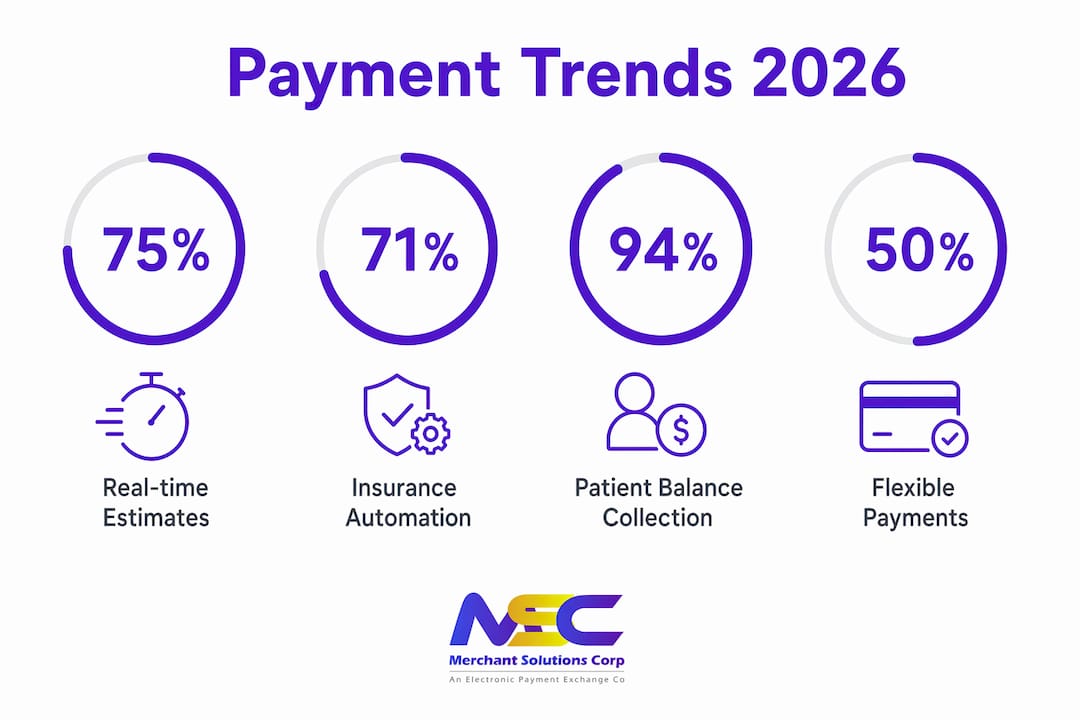
The bottleneck that automation addresses most directly is manual insurance verification. 71% of billing professionals identify manual verification through portals or batch processing as a leading cause of preventable claim denials. Real-time eligibility verification tools pull coverage data automatically before the patient arrives, which means fewer surprises at checkout and fewer denials after the fact.
Harvard Medical School research on AI in dentistry confirms that AI diagnostic tools are improving clinical accuracy, and that same intelligence layer is now extending into the billing side of practice management. The result is a more connected workflow where clinical documentation feeds directly into claim generation.
Key technology capabilities transforming dental payments right now:
- Real-time eligibility verification integrated with practice management software
- AI-assisted claim scrubbing to catch errors before submission
- Automated payment posting that reconciles insurance payments and patient balances without manual entry
- Electronic remittance advice (ERA) processing for faster reconciliation
- Integrated POS terminals that connect front-desk payment collection to the billing system
- Patient-facing digital payment portals with automated balance notifications
- Tokenization and encryption for PCI DSS-compliant card storage
Payment processing integrated with EMR systems eliminates the double-entry problem that slows down front-desk staff and creates reconciliation errors. When your payment terminal talks directly to your practice management software, every transaction posts automatically, and your end-of-day reconciliation takes minutes instead of an hour.
Security is the other side of this technology story. Tokenization replaces stored card data with a non-sensitive token, which means a breach of your system does not expose patient card numbers. PCI DSS compliance is not optional for any practice accepting card payments, and modern integrated payment platforms handle the compliance infrastructure so your team does not have to manage it manually.
3. What patients now expect from dental payment experiences
Patient financial awareness has risen sharply, and it is changing the front-desk conversation. 31% of dental billing professionals identify rising out-of-pocket costs as the single biggest trend affecting their practice, and patients are arriving at appointments with more questions about cost than ever before.
Nearly 75% of dental offices now offer real-time patient financial estimates and digital payment options. That adoption rate signals a shift in what patients consider standard. A practice that cannot provide a cost estimate before treatment begins, or that only accepts checks and cash, reads as outdated to a growing share of the patient population.
Transparency is the core expectation. Patients want to know what they owe before they sit in the chair, not after. Practices that provide upfront financial disclosures, including estimated insurance coverage and patient responsibility, report higher satisfaction scores and fewer disputes at checkout.
Patient payment preferences and emerging trends in 2026:
- Upfront cost estimates before treatment, not just at checkout
- Text-to-pay and email payment links for post-visit balances
- Contactless payment options at the front desk
- Patient portal access to view statements, make payments, and set up plans
- Automated payment reminders via text or email for outstanding balances
- Flexible installment options without requiring a credit application
Patient satisfaction and payment convenience are directly connected. A patient who struggles to pay, or who feels blindsided by a bill, is less likely to return and less likely to refer others. Practices that treat financial communication as part of the clinical experience, not an afterthought, build stronger retention.
4. Regulatory and compliance updates affecting dental billing
Insurance issues are the top challenge for dental practices in 2026, according to the American Dental Association’s Health Policy Institute. Low reimbursement rates and high administrative complexity from third-party payers are the two most cited pain points, and both are getting more complicated, not less.
Dental loss ratio (DLR) regulations are expanding. More states are requiring insurers to pay out a minimum percentage of collected premiums as claims, which creates new oversight requirements and affects how insurers manage claim approvals and denials. The ADA’s Health Policy Institute is tracking the first impact analyses of these mandates, and early data suggest they are influencing both reimbursement levels and service mix decisions by insurers.
Medicare Advantage is also becoming a larger factor. The majority of Medicare-eligible patients are now enrolled in Medicare Advantage plans, and oral health coverage within those plans is evolving rapidly. Practices serving older patient populations need to stay current on coverage changes and billing requirements specific to these plans.
Compliance issues dental practices must track in 2026:
- Dental loss ratio mandates at the state level and their effect on claim approvals
- Medicare Advantage oral health coverage changes and billing requirements
- Patient financing disclosure requirements under state consumer protection laws
- Billing transparency mandates requiring upfront cost estimates
- Payer policy updates on covered procedures and prior authorization requirements
- HIPAA compliance for digital payment platforms and patient data handling
- Affordable Care Act rollback implications for covered dental benefits
The administrative burden of tracking these changes is real. Practices that invest in billing staff training and updated practice management software are better positioned to catch policy changes before they result in denied claims or compliance violations.
5. Financial and tax complexity for dental practices in 2026
The fiscal squeeze on dental practices is not easing. According to ADA Health Policy Institute data, prices for dental equipment and supplies have risen noticeably in the last year, while hourly earnings of dental office staff showed more modest increases. Overall inflation during the same period was 2%. Reimbursement rates, meanwhile, are not keeping pace with either figure.
That gap between rising costs and flat reimbursement is the defining financial pressure of 2026. Practices that respond by chasing patient volume are often running harder to stay in the same place. The more effective lever, according to Planet DDS analysis of 8,500+ practices, is closing billing gaps and improving revenue per chair rather than increasing appointment counts.
Tax planning has also become more complex. The IRS issued updated guidance on bonus depreciation under the One Big Beautiful Bill, which affects how practices can deduct equipment purchases in the current tax year. Practices investing in new POS systems, imaging equipment, or practice management software should consult a dental-focused CPA to confirm the applicable depreciation treatment under current IRS guidance.
Practical financial management priorities for 2026:
- Track revenue per chair, not just total collections, to identify underperforming capacity
- Audit accounts receivable aging monthly and set clear collection thresholds
- Offer third-party financing to convert deferred treatment into collected revenue
- Review insurance network participation against actual reimbursement rates received
- Model the cost of claim denials to quantify the ROI of investing in billing automation
- Consult a dental CPA on bonus depreciation and Section 179 deductions for equipment
- Benchmark overhead costs against ADA national averages to identify outliers
94% of practices collect patient balances within 60 days, but reliance on manual or partially digitized billing workflows keeps many practices from reaching fully automated revenue cycle management. That gap is where revenue leaks.
6. How advanced payment processing drives practice growth
The practices growing in 2026 are not necessarily the busiest ones. They are the ones with the tightest payment infrastructure. Integrated POS systems designed for dental environments connect front-desk payment collection, insurance billing, and patient account management into a single workflow, eliminating the manual reconciliation that drains staff time.
Dual pricing models are gaining traction in dental practices as a way to offset processing fees. Under a dual pricing structure, patients who pay by cash or ACH receive a lower price, while card payments reflect the processing cost. This approach, when disclosed correctly and compliantly, reduces the net cost of accepting cards without eliminating the option for patients who prefer it.
Automated payment posting is another high-impact feature. When insurance payments arrive via electronic remittance advice, automated posting reconciles the payment against the claim without staff intervention. That alone can recover several hours of front-desk time per week in a mid-sized practice.
For multi-location practices and dental service organizations (DSOs), scalable payment infrastructure is not a convenience. It is an operational requirement. A centralized payment platform that reports across locations, standardizes the patient payment experience, and consolidates reconciliation gives DSO administrators the visibility they need to manage revenue cycle performance at scale.
Best-in-class payment processing features for dental practices in 2026:
- EMR and practice management software integration for automatic payment posting
- Dual pricing capability to reduce net card processing costs
- ACH and recurring payment support for installment plans
- Real-time reporting dashboards across single or multiple locations
- Contactless and mobile wallet acceptance at the point of service
- Online payment links for post-visit balance collection via text or email
- PCI DSS-compliant tokenization for secure card storage
- Free or low-cost hardware programs to reduce upfront capital requirements
Pro Tip: When evaluating payment processors, ask specifically about their integration with your practice management software. A processor that requires manual export and import of transaction data is adding work, not removing it.
7. What are the best payment choices for dental patients?
The range of payment options available to dental patients has expanded considerably, and practices that present the full menu clearly see better treatment acceptance and fewer collection problems. The key is matching the payment option to the patient’s situation rather than defaulting to a one-size approach.
For patients with comprehensive dental insurance, the priority is accurate real-time eligibility verification so the patient knows their out-of-pocket responsibility before treatment begins. Surprises at checkout are the most common trigger for payment disputes and delayed collections.
For patients with limited or no insurance, third-party financing through patient lending programs gives them a structured way to commit to treatment without paying the full balance upfront. These programs typically pay the practice immediately while the patient repays the lender over time, which means the practice collects in full without carrying the receivable.
For patients who prefer to manage their own payment timing, HSA and FSA card acceptance is a practical option that many practices still do not actively promote. Patients with these accounts are often motivated to use the funds before year-end, which creates a natural incentive to schedule and complete treatment.
Payment links sent via text or email after a visit give patients a frictionless way to pay outstanding balances from their phone without logging into a portal or calling the office. Adoption of this channel has grown quickly because it meets patients where they already are.
8. How digital currencies and blockchain are entering dental payments
Cryptocurrency and blockchain-based payment systems are not yet mainstream in dental practice billing, but they are moving from theoretical to practical in specific contexts. A small number of practices in tech-forward markets are beginning to accept Bitcoin and stablecoins as payment for elective and cosmetic procedures, particularly for high-value cases where patients prefer to avoid credit card fees.
The more immediate blockchain application in dental payments is not currency. It is claims processing. Blockchain-based claims verification systems can create an immutable record of treatment authorization, claim submission, and payment, which reduces the opportunity for fraud and simplifies dispute resolution between practices and payers. Several health technology companies are piloting these systems, though widespread adoption in dental billing remains a few years out.
Stablecoins, which are digital currencies pegged to the US dollar, address the volatility concern that makes Bitcoin impractical for everyday transactions. A patient paying a $1,200 crown with a stablecoin transfers exactly $1,200 in value, with no exchange rate risk for the practice. The transaction settles faster than a credit card and carries lower processing fees, typically in the range of fractions of a percent.
For practices considering digital currency acceptance, the tax treatment requires attention. The IRS treats cryptocurrency received as payment as ordinary income at the fair market value on the date of receipt, and any subsequent gain or loss on the held currency is a taxable event. Practices should consult a CPA before accepting crypto to set up proper accounting workflows. The future of cross-border payments is also relevant for practices serving international patients who may prefer digital currency transfers over wire fees.
9. How payment adoption rates vary across dental practice types
Not every practice is adopting new payment technologies at the same pace, and the gap between early adopters and laggards is widening. Solo practices and small group practices tend to move more slowly on technology adoption due to limited administrative staff and tighter capital budgets. DSOs and larger group practices are moving faster, driven by the operational leverage that centralized payment infrastructure provides across multiple locations.
AI-driven revenue cycle management adoption is highest among practices with dedicated billing departments, where the ROI of automation is easiest to measure. Solo practitioners handling billing in-house are often the last to adopt, not because the tools are unavailable, but because the evaluation and implementation process requires time they do not have.
Specialty practices, including orthodontics, oral surgery, and periodontics, tend to have higher average transaction values and more complex insurance billing than general dentistry. That combination makes the ROI of payment automation and real-time eligibility verification particularly strong for specialty practices, and adoption rates in those segments are tracking ahead of general dentistry.
Federally qualified health centers (FQHCs) and safety-net dental providers face a different adoption curve. Their patient populations have higher rates of Medicaid coverage and lower rates of private insurance, which means the priority is Medicaid billing accuracy and sliding-scale payment plan management rather than premium financing options.
The practices most likely to lead on payment innovation in 2026 are those that have already integrated their practice management software with their payment processor. That integration is the foundation on which every other payment technology improvement builds. Healthcare payment processing solutions built specifically for clinical environments address the unique workflow requirements that generic retail payment platforms do not.
Key Takeaways
Dental practices that prioritize payment flexibility, billing automation, and transparent financial communication will outperform those that do not in 2026, regardless of patient volume.
| Point | Details |
|---|---|
| Proactive financing lifts acceptance | Presenting financing during treatment planning increases case acceptance by 55%, per Sunbit research. |
| AI automation is now standard | 58% of practices have adopted or plan to adopt AI-driven revenue cycle management tools in 2026. |
| AR management is a revenue lever | 42% of practices report rising accounts receivable; third-party financing directly reduces that trend. |
| Revenue per chair beats volume | Planet DDS analysis of 8,500+ practices shows closing billing gaps outperforms chasing new patient volume. |
| Compliance complexity is growing | Dental loss ratio mandates, Medicare Advantage changes, and payer policy shifts require active billing oversight. |
FAQ
What are the biggest payment trends in dentistry for 2026?
The top trends are expanded patient financing options, AI-driven insurance verification and claims automation, real-time financial estimates at the point of care, and growing regulatory complexity around dental loss ratios and Medicare Advantage billing. Practices that address all four areas will see stronger collections and fewer claim denials.
How does proactive financing affect dental case acceptance?
Presenting financing options during the initial treatment discussion, rather than waiting for the patient to ask, correlates with a 55% increase in case acceptance, according to a Sunbit study of more than 4,900 dental professionals. It also reduces accounts receivable balances by converting deferred treatment into committed payment plans.
What is the 50-40-30 rule in dentistry?
Staff costs typically represent around 25–30% of collections, overhead about 40%, and net profit near 30%, though definitions and targets vary by practice type and source. Definitions and targets vary by practice type and source; so practices should benchmark against ADA Health Policy Institute data specific to their specialty and location.
What is the trend in dentistry in 2026?
The dominant trends are the fiscal squeeze from rising supply and wage costs outpacing reimbursement, growing insurance administrative complexity, and accelerating adoption of AI and automation in billing and payment processing. The ADA’s Health Policy Institute reports that insurance issues, staffing shortages, and overhead costs remain the top three challenges for practices in 2026.
Is becoming a dentist worth it financially in 2026?
Dentistry remains a strong career financially, though the economics are more complex than a decade ago. Reimbursement rates are not keeping pace with practice costs, which compresses margins for practice owners. Dentists who focus on revenue cycle efficiency, payment flexibility, and data-driven financial management are better positioned to build profitable practices despite the current fiscal environment.